




By Nuhu Abubakar
Amid the escalating U.S.-Israel conflict with Iran, oil-rich Gulf nations – Bahrain, Kuwait, Oman, Qatar, Saudi Arabia and UAE – caught in the crossfire, deployment of advanced amphibious missile systems has emerged as a defining feature of the war, with scale and sophistication of missile capabilities, exposing vulnerabilities in regional defense systems and amplifying economic uncertainty, particularly in global oil markets.
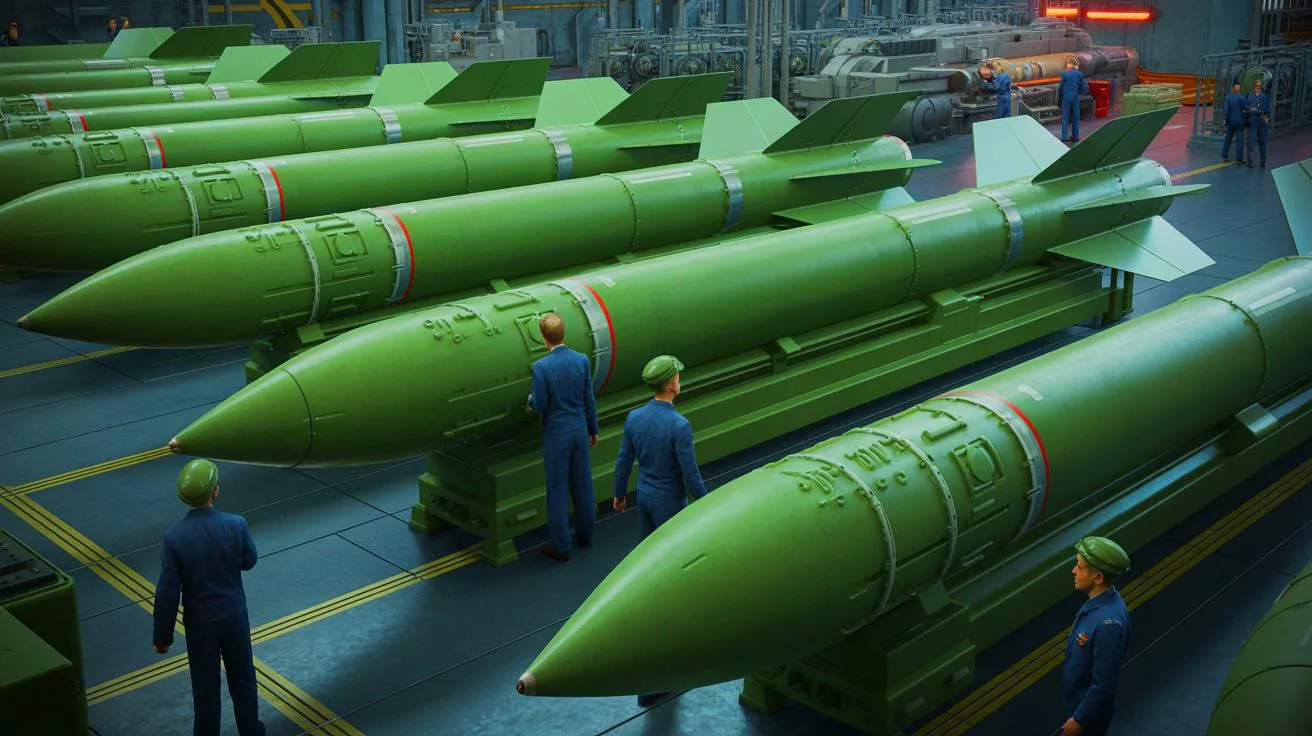
In present-day defence technology, long-range missile systems stand among the most sophisticated achievements of modern engineering, bringing together principles from physics, aerospace, maritime and computer science. At their core, these systems signify a powerful concept: missiles are not merely projectiles, but autonomous land, aerospace and maritime vehicles equipped with onboard computers, sensors, and navigation tools that continuously calculate and refine their path from launch to impact.
Laymen explanations often project missiles operation as “micro pilots” guiding them through the land, sky and seabed. Close to the truth though, this analogy oversimplifies a far more complex reality. Modern missiles rely on what engineers call Guidance, Navigation, and Control (GNC) systems. They are integrated networks of microprocessors, sensors, and algorithms that function as missile’s “brain.” These systems interpret real-time data, determine position, and execute precise adjustments, allowing the missile to navigate vast distances and terrains with remarkable precision.
Central to missiles capability is propulsion. Unlike a thrown object that depends solely on initial force, they generate continuous thrust throughout their flight using engines based on Newton’s Third Law of Motion. Rocket engines, which burn solid or liquid propellants, enable operation both within and beyond Earth’s atmosphere, while jet engines used in cruise missiles draw in atmospheric oxygen for sustained combustion. Many long-range systems employ multi-stage propulsion, shedding weight as each stage completes its burn, thereby increasing range and efficiency.
Navigation is also very critical to missiles functionality. It enables the missile to know its exact position at all times. This is achieved through a combination of inertial and satellite-based systems.
Inertial Navigation Systems (INS), depend on accelerometers and gyroscopes, they track motion from the moment of launch, providing a self-contained and reliable reference. However, because small errors can accumulate over time, modern missiles supplement INS with satellite navigation such as GPS. By combining these systems through sensor fusion, missiles maintain precise positioning across thousands of kilometers, landscape, seabeds and clouds.
Missiles today are also capable of adapting their course during flight. While some follow pre-programmed trajectories, others can receive mid-course updates via communication links, enabling operators to refine targeting or adapt to changing conditions. This flexibility represents a significant improvement from earlier inventions, which lacked the ability to adjust once launched.
As a missile nears its target, it enters the terminal guidance phase, where precision becomes paramount. Various technologies are employed at this stage. Radar guidance uses reflected electromagnetic waves to track targets, while infrared homing systems detect heat signatures based on thermal radiation. Electro-optical systems compare real-time images with stored maps to identify targets, and laser-guided systems track reflected laser energy from designated points. Each method draws on fundamental scientific principles, from wave dynamics to optical physics, to ensure accurate impact.
Missiles are broadly categorized by both their flight characteristics and operational range. Ballistic missiles, a concept first demonstrated by the German V-2 rocket in the 1940s, follow a high, arcing trajectory after an initial powered phase. Modern ballistic systems can travel across continents, re-entering the atmosphere at extreme speeds. Cruise missiles, by contrast, behave more like aircraft, flying within the atmosphere using jet engines and continuously adjusting their path with onboard guidance systems.
Operationally, missile systems are classified by range. Short-range ballistic missiles typically travel less than 1,000 kilometers, while medium-range systems extend to about 3,000 kilometers. Intermediate-range missiles can reach up to 5,500 kilometers, and intercontinental ballistic missiles exceed this threshold, enabling global reach.
Cruise missiles vary widely, with ranges spanning from a few distance to well over 1,500 kilometers depending on design and fuel capacity.
In addition to range, the nature of the payload plays a critical role in determining a missile’s effect. Modern systems can carry a variety of warheads designed for specific objectives. Conventional high-explosive warheads are intended to damage infrastructure within a localized area, while fragmentation-based designs disperse high-velocity fragments to increase effectiveness against exposed targets.
High impact-oriented warheads like the American bunker buster bombs are engineered to breach hardened or underground structures before detonation. The overall impact of any warhead, however, depends on a combination of factors, including its composition, detonation conditions, delivery accuracy, and the surrounding environment.
Through the use of aerodynamic surfaces such as fins and canards, or advanced techniques like thrust vectoring, missiles can alter their trajectory in flight, to further enhance their maneuverability and effectiveness. These adjustments are governed by control theory, particularly feedback systems that ensure stable and precise motion.
The evolution of missile technology reflects decades of scientific progress. From the V-2 rockets of the 1940s to the intercontinental systems developed during the Cold War, and now to modern precision-guided platforms, each generation has introduced new capabilities. Today’s missiles can achieve accuracy levels measured in mere meters, with circular error probable (CEP) values of less than 10 meters in some systems.
Ultimately, modern missile systems are far more than high-speed weapons, they are autonomous, intelligent platforms built on rigorous scientific foundations to operate from air, land, sea, or sub-surface launchers. The perception of “micro pilots” has ceased to an understanding of complex digital systems working seamlessly together. As advances in artificial intelligence, sensor integration, and computational power continue, the precision and capabilities of these autonomous amphibious systems are expected to evolve even further, shaping the future of defence technology and modern warfare.
© 2026 front-page.com.ng