



By Bolanle Mojeed, Grace Izilien, Mary Uzah
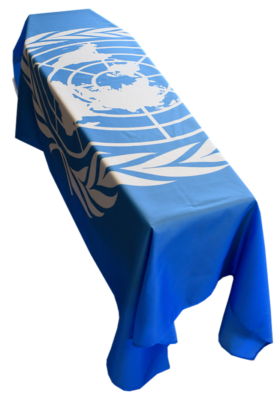
The United Nations is facing renewed scrutiny as analysts, diplomats, and civil society groups argue that the organisation’s repeated failures over the past five decades stem not only from structural weaknesses, but from overbearing influence by powerful states through deep economic inequality among members, rising nationalism, and persistent injustice toward developing and third-world countries in global decision-making.
As wars persist, humanitarian crises deepen, and global trust in multilateral institutions declines, the UN is increasingly seen as an arena where power politics outweigh principles.
For instance, legendary Fela Aníkúlápó Kuti resented the United Nations because he saw it as a tool of Western imperialism rather than a neutral guardian of justice. Fela believed that the UN, dominated by powerful countries-especially the United States and its allies, deliberately ignored fair play while enabling oppression in Africa and the Global South.
In his view, the organisation legitimised unequal global power structures, failed to hold colonial and neo-colonial forces accountable, and spoke the language of peace and human rights while allowing wars, exploitation, and dictatorship to continue unchecked.
His anger was also rooted in the UN’s inaction and selective justice, which he viewed as hypocrisy. Fela famously mocked the organisation in his song “International Thief Thief (ITT)” and other creative works, portraying the UN as slow, toothless, and complicit in the suffering of ordinary people. For him, the UN’s failure to prevent conflicts, economic exploitation, and human rights abuses in Africa confirmed that liberation would not come from international institutions but from resistance, cultural awakening, and self-determination by African people themselves.
U.S. Influence and the Politics of Power
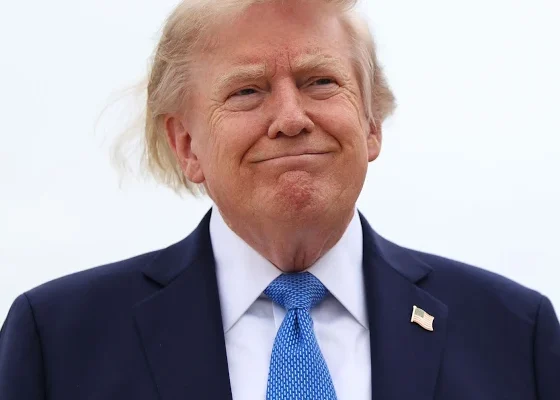
At the centre of criticism is the disproportionate influence of the United States within the UN system. As the largest financial contributor and a permanent member of the Security Council, the U.S. wields significant political leverage over resolutions, sanctions, and leadership appointments.
Over the years, Washington has used its veto power or the threat of it, to block resolutions that conflict with its “strategic interests” or those of its allies. In several high-profile cases involving military interventions, sanctions, or alleged violations of international law, critics argue that U.S. actions were either shielded from accountability or legitimised through selective UN processes.
Financial pressure has also been a key tool. U.S. administrations have repeatedly withheld or conditioned funding to influence UN agencies, affecting humanitarian operations and policy priorities. Observers say this has compromised the organisation’s independence and reinforced perceptions that the UN serves the interests of major powers rather than the global community.
The US has withdrawn from, suspended participation in, or formally announced withdrawal from at least 37 United Nations agencies over time. Some withdrawals were later reversed, but each marked a serious rupture with the UN system which weakened the authority of the UN, encouraged other countries to ignore multilateral norms, and reinforced perceptions that powerful states engage with the UN only when it serves their interests.
For many in the developing and third world countries, these exits symbolised the erosion of a rules-based international order and validated long-standing claims of institutional double standard.
Influence of Economic Inequality in Decision Making
Economic imbalance among member states has further undermined the UN’s credibility. Wealthy nations dominate agenda-setting, negotiations, and outcomes, while poorer countries-particularly in Africa, parts of Asia, and Latin America remain largely sidelined.
Although developing countries make up the numerical majority of UN members, their influence is limited by financial dependence, weak bargaining power, and lack of representation in key decision-making bodies. This inequality is most evident in the Security Council, where permanent membership remains restricted to five powerful states from the Global North and Eurasia.
As a result, global economic rules, sanctions regimes, and development priorities often reflect the interests of advanced economies, reinforcing global inequality rather than addressing it.
Nationalism over Multilateral Action
The rise of nationalist politics has further weakened the UN’s effectiveness. Member states increasingly prioritise domestic political agendas over collective global responsibility, ignoring or selectively complying with UN resolutions.
Major powers routinely bypass the UN when it does not align with their interests, opting instead for unilateral or coalition-based action. Meanwhile, smaller states exploit nationalist rhetoric to resist international scrutiny, including on human rights and governance issues.
This erosion of multilateral commitment has left the UN with limited authority and diminishing relevance in resolving conflicts and coordinating global responses.
Third-World Countries Under Pressure
Critics also point to obvious injustice in how the UN treats third-world countries, particularly in matters of sanctions, peacekeeping, and human rights enforcement.
“Rebellious” nations often face punitive sanctions with severe humanitarian consequences and external intervention under weak or contested mandates.
Limited Resources and Accountability
Violations by powerful states or their allies often go unpunished or are addressed through symbolic resolutions with no enforcement. This double standard in international law has fueled resentment and distrust.
Africa, despite being the region most affected by UN peacekeeping operations, still has no permanent seat on the Security Council, a reality many leaders describe as institutionalised marginalisation.
The UN’s inability to prevent or halt atrocities in Rwanda, Bosnia, Darfur, and Syria remains a lasting stain on its record. In each case, political divisions among powerful states, combined with selective concern for human life, stalled decisive action despite early warnings.
Peacekeeping scandals, bureaucratic delays, and politicised human rights bodies have further eroded public confidence, particularly in countries where UN presence was meant to provide protection.
The U.S. “Peace Board”
The most damaging development yet is the rise of U.S.-led peace frameworks and informal “peace boards” or coalitions, which operate outside the UN system while claiming to deliver stability and conflict resolution.
These mechanisms-often involving select allies and regional partners-effectively sideline the UN, stripping it of its central role in peace and security. Such boards undermine the authority of the Security Council, normalize unilateral or alliance-based conflict management, and reduce the UN to a symbolic observer rather than a decision-maker
By creating parallel structures, the U.S. and other major powers signal that the UN is no longer essential for global peace initiatives. Diplomats warn that this practice erodes the very foundation of international cooperation and confirms fears that the UN has been reduced to a forum for speeches rather than action.
“The moment powerful states create alternative peace platforms, the UN ceases to be the world’s final authority on peace and security,” “That is the real collapse.” said one international diplomacy expert.
At the Edge
Despite mounting criticisms, many analysts still argue that the UN remains necessary. However, they warn that without radical reform-particularly limiting veto abuse, correcting representation imbalances, and reasserting multilateral authority-the organisation risks complete irrelevance.
“For much of the developing world, the UN no longer represents hope,” a member of Guild of Public Affairs Analysts of Nigeria (GPAAN) ooined. “It represents a system where power decides, and justice follows only when convenient.”
As alternative peace mechanisms gain ground and global divisions deepen, the question confronting the world is no longer whether the UN is failing-but whether it can still be saved.
© 2026 front-page.com.ng