




https://jiji.ng/sellerpage-577707
Bolanle Mojeed
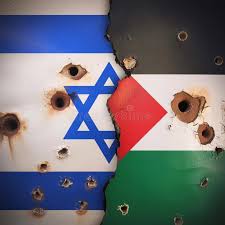
When Israel invaded Gaza Strip, in response to Hamas’s October 7, 2023 surprise attack, the Israel Defence Forces’ (IDF) stated military objective was to destroy the group so that it could never again commit acts of barbarity like the ones it carried out during its October 7 attack. Nearly two years, that ambitious goal remains a “pipe dream.”
Hamas – a group whose members, Yasser Arafat, former Palestine Liberation Organisation (PLO) leader once referred to as “ants”, during a speech in Yemen in 1990, undoubtedly, have been battered but has emerged triumphant from successive imminent defeats.
The Cairo Review’s analysis noted that leadership decapitations, also known as targeted killings, which have featured prominently among Israel’s tried and tested counterterrorism tactics, particularly in times of heightened tensions hasn’t achieved its operational goals.
Israeli military’s early optimism and suggestions of Hamas’ obliteration once it is stripped of centralized command structure, heavy weaponry, and defensive strongholds it once had, has turned out to be a miscalculation. Hamas has suffered leadership depletion no doubt, as witnessed in the killings of Sinwar and other senior commanders, the extamination of most of Hamas’s combat brigades, and the vast destruction wreaked on Gaza. Israel’s operation Iron Sword may have succeeded in degrading Hamas, but new leaders have emerged. And like the Nigeria’s Boko Haram conundrum, worse and unpleasant characters may rise in there places.
With about 80% support among Palestinians, Hamas movement and ideology ultimately remain unbroken – that is an insurmountable challenge to the enemy.
A 2006 Los Angeles Times reports reveal Hamas’ governance and social work rating among Gazans.
According to the report, the work Hamas does at home is an often-overlooked key to the domestic popularity of an organization most known elsewhere for killing.
“Hamas doesn’t have much in the way of resources, but they have a big network of charity working in order to reduce the suffering of the Palestinian people,” said Sami abu Zuhri, a spokesman for the group in Gaza. “People feel the credibility of Hamas, and its ability to make change through the charity organizations that it runs.”
In Gaza, Al Salah Society’s school for 1,000 orphans and other youngsters in the teeming town of Deir al Balah stands in sharp contrast to the crumbling concrete and dusty streets around it, a fenced-in oasis of palms and neat classrooms.
In his study of Israeli targeting killing trends, scholar Steven David found that during the Second Intifada (2000–2005), Israel embarked on such operations more than any time in its history to both deter and impede further terrorist attacks against Israelis. While in the First Intifada (1987–1993) the ratio of Palestinians to Israelis killed was roughly 25 to one, well-armed Palestinian militant groups, making use of suicide bombers, had reduced that proportion to three to one during the Second Intifada. Israel responded to these increasingly lethal attacks through increased control of Palestinian movement, military incursions into Palestinian Authority (PA)-controlled areas, and a wave of targeted killings of Palestinian militants. According to B’Tselem, an Israeli human rights organization, between September 2000 and 2006, Israeli security forces conducted at least 208 targeted killings.
Israel has publicly claimed to have dismantled 18 of Hamas’ 24 battalions, killed or incapacitated 14,000 Hamas fighters, and destroyed a significant portion of the group’s underground tunnel system. Since last October, Israel has reportedly also killed over 100 Hamas leaders, among them Marwan Issa, the deputy commander of Hamas’ military wing in Gaza, and Haniyeh, chairman of the Hamas Political Bureau. 21 months into Israel’s Swords of Iron operation, Hamas seems to be surviving!.
Maayan Hoffman’s opinion in The Media Line, highlighted how a mix of battlefield challenges, ambitious war aims, and global pressure help Hamas remains in power, absorbing most modern military hardware and intelligence onslaught for nearly 21 months.
As talks of another ceasefire between Israel and Hamas – one that could bring home the remaining 50 hostages and effectively end the nearly 2 – year war resonate from the White House, the fact that Hamas remains in power in the Gaza Strip has neutralised at least two of the war’s central objectives – eradicating Hamas militarily and politically and eliminating Gaza as a threat to the residents of southern Israel.
The question: If Israel was able to an extent, accomplish its objectives in battles against Hezbollah and Iran, why not Gaza?
Several key factors have been identified by experts as major differences between the war in Gaza and the other conflicts Israel has fought in recent months and years.
More Than Just Military Goals
One of the stated aims of the war in Gaza is the destruction of both the military and civilian wings of Hamas. This stands in contrast to Israel’s more narrowly defined objectives in its recent campaigns against Hezbollah and Iran.
According to Adi Schwartz of the Misgav Institute, “this goal is much wider” than those in Lebanon or Iran, focused solely on military targets. In Gaza, Israel set out to dismantle an entire governing infrastructure, military and political alike.
To a degree, Israel has succeeded in weakening Hamas and pushing back its operations, similar to what it achieved with Hezbollah and Iran’s nuclear capabilities. However, unlike in those cases, Hamas remains in control of the population in the strip.
The Hostage Dilemma
From day one, Israel has had to operate under significant constraints due to the hostages being held in Gaza.
“There were certain neighborhoods and certain cities that Israel was very careful not to attack or bomb, because the IDF believed the hostages were being held there,” Schwartz said. “If you and I know that, obviously, Hamas also knew it. Meaning, they could cling on to those hostages and have these areas where they could continue fighting.”
Schwartz referred to the hostages as a kind of “security blanket” for Hamas.
Brig. Gen. Amir Avivi, a reservist of the Israel Defense and Security Forum agreed. He told The Media Line that there has been ongoing tension between two central goals: bringing the hostages home and eradicating Hamas. At times, he said, these objectives were in direct conflict, exactly for the reasons Schwartz described.
Still, Avivi said that if a temporary ceasefire could bring home as many hostages as possible, Israel should take that opportunity – even if it prolongs the military mission against Hamas, so long as that goal is preserved.
“The idea would be that the army stays in position, we don’t retreat,” Avivi explained. “We have a ceasefire and then continue. If we retreat and they regroup in the areas we already conquered, that is a problem.”
Hamas’ Underground Advantage
Fighting Hamas is fundamentally different from conducting airstrikes on Iran or even launching a ground invasion against Hezbollah. One primary reason is Hamas’ elaborate and extensive tunnel system.
The group has constructed more than 200 miles of underground tunnels—many reinforced with concrete and iron—creating a hidden battlefield that has significantly complicated Israel’s operations.
Avivi explained that these tunnels have been used for multiple purposes: to hide hostages, to store hundreds of rockets, RPGs, and explosive devices, and to provide cover for Hamas fighters.
The tunnels have also neutralized many of the Israeli military’s battlefield advantages, such as superior intelligence gathering, precision airstrikes, and advanced armored combat units. The enemy has literally gone underground, making it harder to target and defeat.
No State, No Rules
Another challenge in Gaza is the absence of any legitimate partner.
In Lebanon, while about a third of the population is Shiite and supportive of Hezbollah, another third is Christian, and another third is Sunni Muslim. This diversity allows for some level of internal political balancing.
“There is a government in Lebanon that tries,” Schwartz said. “We don’t yet know whether or not they’re going to be successful, but at least you have someone to work with inside Lebanon to try to curb Hezbollah’s operations.”
In the Gaza Strip, you have almost 100% of the population that is pro-Hamas or at least shares Hamas ideology
In contrast, Gaza offers no such opportunity. “In the Gaza Strip, you have almost 100% of the population that is pro-Hamas or at least shares Hamas ideology,” Schwartz explained.
Moreover, unlike Lebanon or Iran, Israel is not fighting a state – it is fighting a coastal enclave ruled by a terrorist entity that does not abide by the rules of war.
“There’s a great difference between a war against a state and a war against a terror organization,” said Harel Chorev, a senior researcher at the Moshe Dayan Center. “From the very beginning, people were mistaken to compare the 1973 Yom Kippur War or the Six-Day War with the war in Gaza. This is not a conventional war with tanks against tanks or infantry against infantry.”
Supplying the Enemy
Then there is the issue of humanitarian aid.
“Israel, other than any other country in the world, has been required to supply the enemy,” Schwartz stressed. “Israel is under tremendous pressure to provide aid and prolong the war. Putting a siege on an area is a classic and legitimate tool of war.”
Schwartz argued that Israel has been held to a different standard than other nations in its war against the Palestinians in Gaza—forced to provide food, water, and electricity to an area controlled by a terrorist organization, thereby inadvertently sustaining Hamas.
“I have never heard of an army or a country that is trying to win a war and at the same time providing these supplies to the enemy,” Schwartz said.
He added that instead of giving in to international pressure, Israel should have implemented a clearer policy. Civilians wishing to surrender could have been safely relocated to a designated humanitarian zone in the southern Gaza Strip, where they would have received food, water, and shelter. The remaining territory, he suggested, could have been declared a war zone without such constraints.
According to Schwartz, the failure to manage this situation effectively stemmed from two factors: relentless international pressure and the Israeli military’s lack of a concrete plan to handle such a scenario.
A War on Multiple Fronts
Finally, despite the attack from Gaza setting off the war, “there has not been a single moment where the IDF could focus all its efforts on Gaza,” Avivi said.
From the outset, Israel was pulled in multiple directions. Either the American administration imposed heavy constraints on the military, or it was required to divert resources to fight other enemies.
From the first rocket launched by Hezbollah on October 8, 2023, the army had to deploy large numbers of soldiers to the northern border and ultimately engage in combat in Lebanon. Soon after, the fall of the Assad regime created instability on the Syrian border, requiring additional forces. And then came new threats from the Houthis and Iran, drawing further attention and resources.
“For the first time in this war, the full center of gravity is going to Gaza,” Avivi said.
Obviously, the Israel – Palestine conundrum being a deep-rooted political, social, and ideological issue, won’t be solved by military force.
© 2025 front-page.com.ng