



By Pascal Chimezie
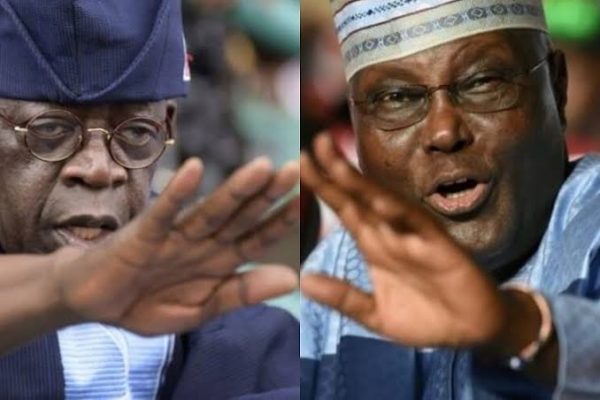
As Nigeria inches closer to another cycle of election year, amidst uneasy calm in the main opposition camp, the question on the lips of many is, who, between the two main contenders in the rainbow coalition of the African Democratic Congress (ADC), Peter Obi, former governor of Anambra state and Labour Party presidential candidate in 2023 election, and Atiku Abubakar, former Vice-President and presidential flag bearer of the People’s Democratic Party (PDP) in the last election, will fly the flag of the ADC to challenge the incumbent, President Bola Ahmed Tinubu of the All Progressive Congress (APC), in the 2027 presidential poll?
On December 31, 2025, Peter Obi formally joined the ADC, ending months of speculations on his membership status. It was an opportunity for him to reaffirm his earlier resolve to be on the ballot for 2027 election, to the cheers and jubilations of his supporters. Obi was warmly welcomed into the fold by the who-is-who in ADC, including the big ‘elephant’ in the house, Alhaji Atiku Abubakar, who himself has, time without number, reiterated his determination to contest the 2027 election, to the consternation of most Nigerians.
Atiku’s insistence to contest is unsettling many Nigerians, as well as ruffling feathers even among his coalition members. There are those who feel strongly he should play a fatherly role to mentor and support a younger candidate. Others, however, feel he stands a better chance this time around. Each side has continued to maintain its strong position.
Members of the “Obidient movement” supporting Peter Obi, in a somewhat hardline posture, warned that they might pull out of the coalition if Peter Obi is denied the presidential ticket of ADC, or prevailed to deputize another candidate. Dele Momodu, a member of the coalition, in a sharp rebuke, lambasted the “rambunctious Obidient movement,” and cautioned them to shun “language of threat.” He reminded the group that it was not only Peter Obi that had declared interest to vie for President. In his order of ranking, Dele Momodu listed former Vice-President Atiku Abubakar, Rotimi Chibuike Amechi, former Speaker and ex-governor of Rivers state, and Peter Gregory Obi. He maintained that ADC would give the contestants a level playing field in ‘free and fair’ primaries. A bit assuring, though what constitutes “free and fair” primaries could sometimes be contextually relative.
The dissonance in ADC betrays some undercurrents, which many political observers believe, if not decisively settled as soon as possible, are capable of harming unity and cohesion of the coalition and affect its chances in the upcoming election. Will members of the ADC be able to manage their differences and issues that might arise from a free-for-all primaries, including possible disaffections?
It is important to note that party primaries do not always produce the most acceptable candidate for an election. Delegates’ choices are often influenced by several factors, most times, by deep pockets of the contesters. Party delegates are only much more interested in how much they could make from the candidates than in the overall interest of the party. Party primaries are a game of the highest bidder. Whether the candidate that eventually wins is generally acceptable, or loses at general election proper, is of little concern to the delegates. This is why, in some advanced democracies, political parties invest heavily in conducting public opinion polls to ascertain the ratings and public acceptability of each of the candidates they intend to field in an election. Nothing stops Nigerian political parties from emulating this best international democratic practice, rather than relying on crude methods that encourage inducement and manipulation in selecting flag bearers.
The question on the lips of most Nigerians is, why is Atiku Abubakar hell-bent on contesting the 2027 presidential, when it is still the turn of the South to produce Nigeria’s President? The simplistic answer is that it is within the constitutional right of the former Vice-President, as a Nigerian eminently qualified, to contest, provided he satisfies other requirements of the electoral law. But there is also a far more deeper context for the reason.
To begin with, the Northern political elite, somehow, believes there is always a monolithic North, whose electoral numbers are enough to make anyone the President of Nigeria, Very often, one hears the boasting, “We have the numbers.” This is nothing but a fallacy and height of arrogance. There is no such thing as “monolithic North,” or “bulk votes” anywhere, outside election rigging.
Conservative Northern elements also believe the North had been shortchanged from power by South since 1999. Speaking recently on the contentious issue of zoning, former governor of Sokoto state and former Speaker of House of Representatives, Hon Aminu Tambuwal, said, “calculating presidential tenure since 1999-when zoning formally began-reveals that the South has held power for longer periods,” adding that “this imbalance justifies” their region’s claim to the presidency.
The North seems not to have overcome the grief of sudden death of President Umaru Musa Ya’Adua’s and the regret of his 1-year left over term in office completed by former President Goodluck Jonathan in 2010. The cabals interested in retaining power, shrouded every information about the late President’s health and death in utmost secrecy. Sworn in to office in May 29, 2007, Yar’Adua left Nigeria on November 23, 2009 for medical treatment abroad. His prolonged absence, without formally transmitting power to his deputy, Goodluck Jonathan, created serious constitutional crisis in government. It took the intervention of the National Assembly’s “doctrine of necessity” to proclaim Goodluck Jonathan “Acting President” on February 9, 2010. President Yar’Adua was officially pronounced dead on May 5, 2010, and Goodluck Jonathan was sworn in as the substantive President to complete his remainder 1- year tenure. This is now the bone of contention.
Be that as it may, the likes of Aminu Tambuwal conveniently forget that Nigeria’s civil rule did not start in 1999 for the first time. Why is he not reckoning with the other previous democratic dispensations? Who were those who led the country in those era? Which region or zone did they come from? The argument that the South has shortchanged the North in power is not only false and misleading, it diverts attention from greater issue of injustice against a particular region, the South-East.
A cursory review of leadership distribution index in Nigeria reveals that out of the country’s 66 years of independence from 1960, the North has ruled cumulatively, both military and civilian, for over 46 years, while the South has ruled, so far, for 20 years. Excluding military rules, the North has ruled Nigeria under civil governance for 21 years since 1960, and the South for 17 years, if President Tinubu completes his 4-year term in 2027. So, in whose favour is the power imbalance tilted: North or South? Undoubtedly, in favour of the North. What this means is that accumulative Northern leadership is what has largely shaped and defined the country as it is today. And who is proud of what Nigeria is today? It is time, therefore, the power mongers allowed others, particularly the South-East schemed out of power for so long, to produce the next President.
Also, the argument that zoning or rotation is not constitutional is playing the ostrich. The six zonal geopolitical structure which Nigeria operates today is not written anywhere in the constitution, after all. A multicultural society such as Nigeria needs multidimensional approaches to ensure a sense of belonging to every component.
Truth be told, Peter Obi stands no chance of emerging the ADC presidential flag bearer in a primary where Alhaji Atiku Abubakar remains a major contender. Nursing such hope is not only naive, but misplaced. The Port Harcourt intrigues of 2022 under PDP, which Aminu Tambuwal played more than a passing role, is a lesson. The fallout of that unfortunate incident is what led to the balkanization of the PDP today. Atiku is a man of considerable means and influence. He boasts of learning the rudiments of partisan politics from the late Shehu Musa Yar’Adua; even though that learning has not translated into winning elections. The fault is not from Nigerians who have always given him the benefit of the doubt.
Again, Atiku has not been able to successfully defend votes cast for him by the electorates. In 2019, it is believed that Atiku won the election against President Muhammadu Buhari. But he was robbed of victory through alleged complicity of the INEC under Prof. Mahmoud Yakubu, which denied existence of “back-end server.” The same repeated itself in 2023, courtesy of INEC “glitch.” Atiku failed to mark INEC bumper-to-bumper in its shenanigans, leaving only Senator Dino Melaye as PDP agent to shout himself hoarse at the INEC headquarters. Atiku was to crown his aloofness with his inaction in Edo state governorship election, in which PDP was brazenly robbed of victory. To those who believe it is only Atiku Abubakar that has what it takes to police votes nationwide, there is no such guarantee.
Beyond excuse of North being shortchanged, Atiku’s renewed determination to contest, not minding groundswell of public sentiment to the contrary, stems from the boost he appears to have received from former allies of late President Muhammadu Buhari, who are rallying around him. Atiku seems to have inherited Buhari’s political structure, just as he did with the late Shehu Musa Yar’Adua’s in 1998. Atiku has always been a lucky successor, except, of course, in his political relations with Obasanjo.
Secondly, Atiku Abubakar’s insistence to contest tend to lend credence to the suspicion of a discreet agenda to stop at all costs South-East attempts to produce president of Nigeria. Otherwise, how does one explain the efforts by some ADC members to woo former President Goodluck Jonathan to contest 2027 presidential under its platform? If they are willing to back Goodluck Jonathan, a South-Southerner, why not a candidate from the South-East? According to former British statesman and UK Prime Minister, Benjamin Disraeli, “There is no act of treachery or meanness of which a political party is not capable; for in politics there is no honour. “While Francis Bacon reminds us that: “The zeal which begins with hypocrisy must conclude in treachery; at first, it deceives, at last, it betrays.” The name of this game is treachery. It is the game of politics. Those who overcome are those who come to the table with alternate plans of action. It is a word for Peter Obi. For now, what ADC does or fails to do will define not only its own destiny, but also the future of the country.
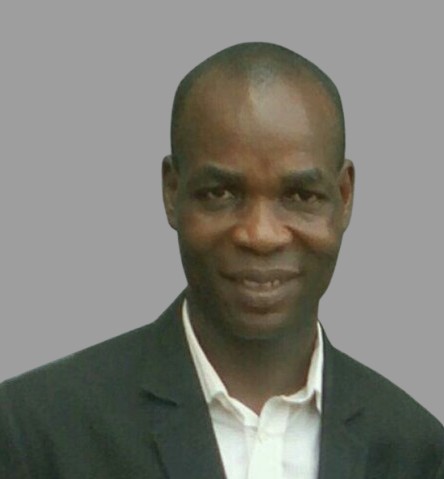
Pascal Chimezie writes from Lagos
chimeziepascal@gmail.com
© 2026 front-page.com.ng