




By Danladi Abubakar
In an era where chronic diseases have quietly become one of humanity’s greatest health crises, millions of people across the world continue searching for miracle cures in bottles, powders, herbal mixtures, and fashionable detox drinks while overlooking the deeper roots of their declining health. Across restaurants, wellness blogs, television adverts, and social media platforms, ginger shots, garlic infusions, clove water, lemon detoxes, bitters, and honey mixtures are increasingly promoted as magical healing agents capable of reversing years of metabolic destruction.
Yet, many medical experts and longevity researchers continue to warn that no herb, spice, tea, or supplement can compensate for a consistently destructive lifestyle.
The uncomfortable truth is this: the human body cannot thrive under constant nutritional overload, chronic inflammation, stress, overeating, and metabolic dysfunction. Herbs may support healing, but they cannot rescue a body continually damaged by excessive sugar consumption, ultra-processed foods, refined carbohydrates, unhealthy oils, alcohol abuse, physical inactivity, and compulsive eating habits.
For decades, modern diets have drifted dangerously far from biological reality. The average person now consumes alarming quantities of refined sugar, industrial seed oils, processed snacks, sugary beverages, fast food, chemically preserved meals, and excessive carbohydrates. The result has been an unprecedented global rise in obesity, diabetes, hypertension, fatty liver disease, cardiovascular disorders, insulin resistance, hormonal imbalance, inflammation-related illnesses, and premature aging.
Ironically, many individuals attempt to counter these consequences with occasional herbal drinks or “detox” mixtures like ‘Agbo jedi’, ‘Opa eyin’, ‘Ale’, ‘No rival’, ‘Oga madam ‘ etc., while continuing the same eating and drinking patterns that created the problem in the first place.
Nutrition scientists increasingly argue that this approach fundamentally misunderstands how healing works.
A body constantly overwhelmed by inflammatory foods struggles to effectively utilize even beneficial nutrients and antioxidants. The liver, digestive system, pancreas, cardiovascular system, and hormonal networks become overloaded. In such an environment, herbs become supportive tools at best – not miracle solutions.
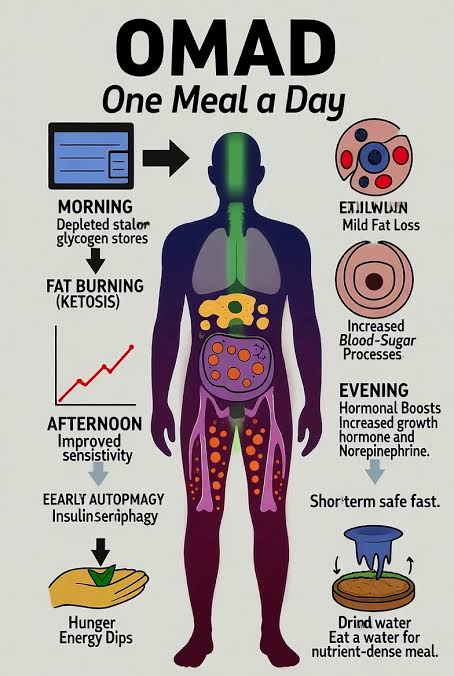
This is where growing interest in OMAD – One Meal A Day, enters the conversation.
OMAD is a structured form of intermittent fasting in which an individual consumes daily calories within a single meal window, often fasting for approximately 23 hours. Though many view it as a modern wellness trend, fasting itself is ancient, practiced for centuries across religious traditions, African and Asian indigenous culture with profound historical strict diet, and holistic ecological knowledge, remain a model for both spiritual discipline and physical restoration.
In recent years, scientific research into fasting and metabolic health has expanded dramatically. Studies increasingly suggest that controlled fasting may improve insulin sensitivity, reduce inflammation, support weight loss, stabilize blood sugar, improve metabolic flexibility, and activate cellular repair processes associated with longevity.
OMAD is not starvation, but metabolic rest.
Modern society rarely allows the human body to rest from digestion. Constant snacking, sugary drinks, late-night eating, processed foods, and frequent meals keep insulin levels persistently elevated throughout the day. Over time, this contributes to fat accumulation, hormonal disruption, chronic hunger cycles, and metabolic disease.
How OMAD interrupts that cycle.
By extending the fasting window, the body gradually shifts from relying primarily on glucose toward utilizing stored fat for energy. Researchers believe this metabolic transition may stimulate fat oxidation, improve insulin regulation, and activate autophagy – a natural biological process through which the body clears damaged cellular material.
Emerging evidence also suggests that fasting may help reduce systemic inflammation, one of the major drivers behind modern chronic diseases including diabetes, cardiovascular disease, arthritis, stroke, neurodegenerative disorders, and accelerated aging.
Importantly, advocates of OMAD repeatedly stress that fasting alone is not enough. What matters equally is the quality of the single meal consumed.
A true therapeutic OMAD lifestyle prioritizes:
vegetables,
healthy proteins,
natural fats,
nuts,
seeds,
fruits in moderation,
It discourages excessive sugar, refined flour, processed snacks, industrial oils, and constant caloric grazing.
This distinction is critical because fasting cannot compensate for nutritional abuse. One cannot fast for 23 hours and then consume excessive junk food expecting meaningful healing to occur. Sustainable recovery requires both metabolic discipline and nutritional quality.
Remarkably, many of these principles echo the habits shared by some of the world’s oldest living people.
Jeanne Calment of France, who lived to 122 years and remains the oldest verified human in recorded history, famously advised:
“If you can’t do anything about it, don’t worry about it.”
Her philosophy reflected emotional calmness, moderation, and avoidance of chronic stress – factors increasingly linked by researchers to healthy aging and lower inflammation levels.
Japanese centenarian, Jiroemon Kimura, who lived to 116, summarized longevity in remarkably simple terms:
“Eat light and live long.”
Kimura practiced portion control and remained physically active well into old age. His advice mirrors growing scientific support for calorie moderation, fasting, and metabolic balance.
Researchers studying long-living populations across Okinawa in Japan, Sardinia in Italy, and Nicoya in Costa Rica repeatedly find similar patterns:
moderate eating,
reduced stress,
regular movement,
social connection,
emotional stability,
and purposeful living.
Former Nigerian President Olusegun Obasanjo has similarly spoken publicly about healthy aging and longevity. The former president, who has managed diabetes for over 40 years, revealed his daily wellness routine, famously emphasizing the following lifestyle secrets: “Controlled Diet” He advised completely of abstaining from sugar, and carefully monitoring carbohydrate intake.
His observations align closely with modern preventive medicine and longevity research.
Caution.
OMAD may not be suitable for everyone. Pregnant women, children, individuals with eating disorders, and people with certain medical conditions should seek professional medical advice before beginning prolonged fasting routines. Some experts also warn that excessively restrictive eating patterns may prove difficult for certain individuals to sustain long term.
Nevertheless, the broader scientific consensus increasingly supports one clear principle: reducing excessive caloric intake and limiting ultra-processed foods significantly improves long-term health outcomes.
Beyond weight loss, many individuals practising structured fasting report improvements in:
mental clarity,
energy stability,
digestive comfort,
sleep quality,
appetite control,
reduced sugar dependence,
and emotional discipline around food.
Perhaps most importantly, fasting forces a psychological reset around eating itself. It challenges modern patterns of emotional eating, compulsive snacking, stress-driven consumption, and food addiction reinforced by the ultra-processed food industry.
The harsh reality remains that no amount of herbal and chemical concoction: ginger, garlic, turmeric, lemon, clove, bitters, or ‘slimming tea’ can fully protect a body continuously subjected to destructive dietary patterns.
Healing begins not merely with what people add to their diets, but with what they are willing to remove.
Reducing sugar intake, eliminating processed foods, avoiding inflammatory eating habits, maintaining healthy body weight, exercising regularly, sleeping adequately, managing stress, and allowing the body periods of metabolic rest may ultimately prove far more powerful than any marketed ‘Agbo jedi’.
Herbs still possess value. Garlic contains sulfur compounds linked to cardiovascular support.
Ginger contains anti-inflammatory properties. Cloves contain antioxidants. But these natural substances function best within a healthy physiological environment – not as emergency cleanup exercise for years of nutritional neglect.
Modern health culture often seeks shortcuts because discipline is difficult. Yet biology does not negotiate with marketing slogans, emotional cravings, or wishful thinking.
The body responds to consistent habits.
Indeed, the testimonies of centenarians across the world increasingly point toward the same conclusion: longevity is rarely built on miracle products. It is built quietly through disciplined daily choices repeated consistently over decades.
In that sense, OMAD represents more than a diet trend. For many advocates, it symbolizes a return to restraint, intentional eating, metabolic recovery, and respect for how the human body was designed to function in a world increasingly overwhelmed by excess consumption.
© 2026 https://front-page.com.ng