



By Zainab Mohammad
Stefan Lindemann defined armed conflict as “a civil war if:
(a) The parties are politically and militarily organised, and they have publicly stated political objectives.
(b) The government is a principal combatant.
(c) The main insurgent organisation(s) are locally represented and recruit locally, though there may be additional external involvement and recruitment.
(d) The conflict causes at least 500 to 1000 deaths during the first year or at least 1000 cumulative deaths in the next three years.
(e) The conflict is characterised by sustained violence, with no three-year period having less than 500 deaths.
(f) The weaker party is able to mount effective resistance, measured by at least 100 deaths inflicted on the stronger party.”
Former United Nations Secretary-General Antonio Guterres said 30 March 2022 two billion people – one-quarter of humanity – are living in conflict areas today, as the world experiences the highest number of violent conflicts since the end of World War II in 1945. He told the UN Peacebuilding Commission that last year 84 million people were forced to leave their homes because of conflict, violence and human rights violations. “And this year, we estimate that at least 274 million will need humanitarian assistance,” he said.
The Armed Conflict Database, an annual survey is published by the London-based International Institute for Strategic Studies (IISS). According to the International Institute for Strategic Studies (IISS) in London, the past few years have seen a considerable increase in the number of war victims. The number of war dead rose from 56,000 in 2008 to 180,000 in 2014, even though instead of 63 only 42 armed conflicts were counted. In 2013, for the first time since the end of the Second World War, more than 50 million people were refugees.
In 2015 Globally, conflict fatalities amounted to 167,000, which was less than the 180,000 documented in 2014. The last edition of the Armed Conflict Survey covered 42 conflicts around the world. This new edition deals with 37 conflicts, a slightly smaller figure.
The United Nations defines “major wars” as military conflicts inflicting 1,000 battlefield deaths per year. In 1965, there were 10 major wars under way. The new millennium began with much of the world consumed in armed conflict or cultivating an uncertain peace. As of mid-2005, there were eight Major Wars under way [down from 15 at the end of 2003], with as many as two dozen “lesser” conflicts ongoing with varying degrees of intensity.
Most of these are civil or “intrastate” wars, fueled as much by racial, ethnic, or religious animosities as by ideological fervor. Most victims are civilians, a feature that distinguishes modern conflicts. During World War I, civilians made up fewer than 5 percent of all casualties. Today, 75 percent or more of those killed or wounded in wars are non-combatants.
Africa, to a greater extent than any other continent, is afflicted by war. Africa has been marred by more than 20 major civil wars since 1960. Rwanda, Somalia, Angola, Sudan, Liberia, and Burundi are among those countries that have recently suffered serious armed conflict.
War has caused untold economic and social damage to the countries of Africa. Food production is impossible in conflict areas, and famine often results. Widespread conflict has condemned many of Africa’s children to lives of misery and, in certain cases, has threatened the existence of traditional African cultures.
Conflict prevention, mediation, humanitarian intervention and demobilization are among the tools needed to underwrite the success of development assistance programs. Nutrition and education programs, for example, cannot succeed in a nation at war. Billions of dollars of development assistance have been virtually wasted in war-ravaged countries such as Liberia, Somalia, and Sudan.
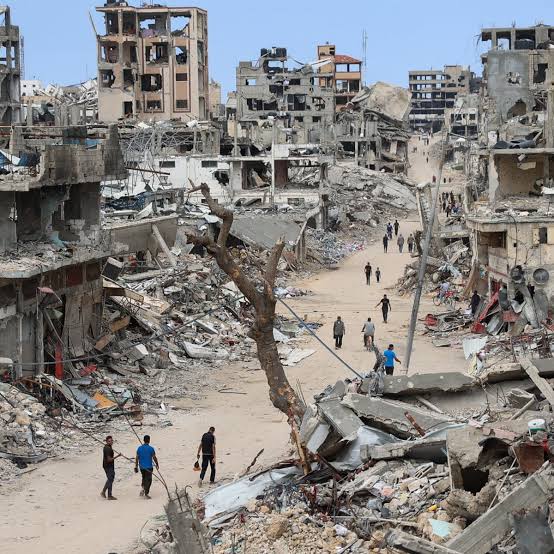
Globally, armed conflicts result in unprecedented waves of population displacement, both within and across borders. Armed conflicts are associated with direct consequences like deaths, diseases, stress, migration and environmental destruction; indirect socio-economic disruption in the form of institutional, infrastructural and human capital destruction; and opportunity costs like famine due to disruption of agriculture as well as poverty due to disruption of commerce and education.
Conflicts disrupt the socio-cultural set up of communities and destroy sources of people’s livelihood. Post-conflict socio-economic reconstruction needs to encompass programs that restructure people’s morals and values through counselling. HIV/AIDS prevention programming in post-conflict communities should deal with socio-cultural disruptions that emerged during conflicts. Some of the disruptions if not dealt with, could become normalized yet they are predisposing factors to high risk sexual behavior (HRSB).
Pervasive conflict and war often catalyze the disintegration of communities and families as well as the disruption of social norms governing people’s sexual behaviour. Men who lose their status in their communities or families due to armed conflict are more likely to resort to alcohol abuse and to engage in HRSB.
Most women also become vulnerable given their increased dependence on men for physical or economic security. Since many displaced persons are forced to leave their homes, women may be forced to trade sex with armed men or other people supposed to protect them in exchange for food, water, shelter, protection and other basic commodities. Such “survival sex” might involve sex with men infected with sexually transmitted infections (STIs), including HIV. Women are also likely to suffer at the hands of boys and young men who become child soldiers and are forced to become violent and abusive as part of their training.
Living in IDP camps affected people. Cultural values and norms lost their sting. Children stopped respecting their elders. Dishonor of sexual sanctity through transactional sex and practices like incest mirror the consequence of exposure to conflict. Men lost their wives and daughters to soldiers. Soldiers took people’s wives since they had more money. HRSB was associated with concentration of people in camps where idleness and unemployment were the norm. Reports of girls and women who had been victims of rape and defilement by men with guns are common. Signs of living in conflict include food insecurity, poor and overcrowded housing, learned helplessness, and apathy. Many people display persistent worries, hopelessness, abuse alcohol and suicidal ideas.
© 2025 front-page.com.ng