



Oshiomhole Inumah
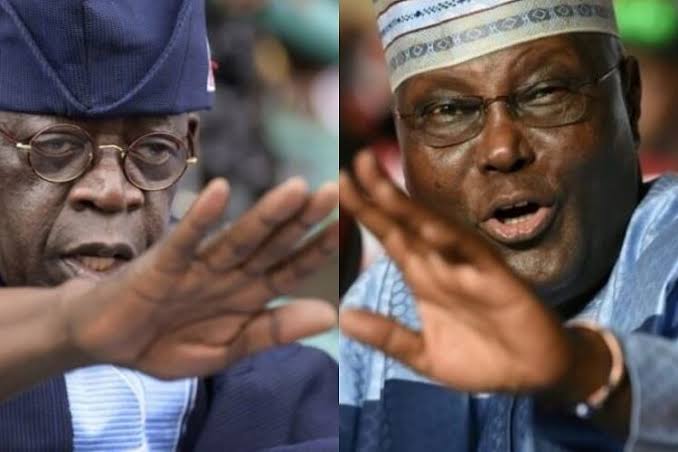
When the All Progressives Congress (APC) rebuked Nigeria’s main opposition candidate Atiku Abubakar for referring to President Bola Ahmed Tinubu simply as “Bola,” it probably expected a brief lesson in decorum. What followed was a flood of reactions under Punch Newspapers’ Facebook post, sharp, funny, partisan and, in places, thoughtful. Taken together, they amount to a snapshot of how ordinary Nigerians think about power, politeness and priorities.
The dominant reaction was bewilderment. Readers in standard English, Pidgin and street slang asked the same question again and again: is Bola not his name? Has he changed it? Wetin be him name then? The repetition was itself the argument. For most commenters, “Bola” is the name the President’s parents gave him, and using it cannot be an offence. One reader asked what exactly a name must contain to count as respectful.
Many then followed the APC’s logic to absurd ends. Should Atiku have said “Daddy”? Should he have added an “E” to make “Ebola,” or a letter before the “B” to honour a Yoruba convention? Others quipped that the President had become “Bisi,” “Bella,” “Labo” or “T-Pain.” The humour carried a serious point: a grievance that rests on the mere use of a name is a thin one. Several readers called the row a distraction, and one asked what the “main reason” behind the controversy really was, a hint that the real issues were being avoided.
A second line of argument appealed to precedent. Readers noted that Americans say “Trump” without a title and nobody takes offence, and that referring to Tinubu as “Tinubu” is nothing sinister. Others found the hypocrisy closer to home. Party faithful chanted “Buhari! Buhari! Buhari!” at rallies, and a popular song vowed to stand “on your mandate,” with the name sung freely. If motor-park touts can sing “Bola,” one reader asked, why is it an offence when Atiku says it?
The most heated exchange concerned former President Goodluck Jonathan. Supporters of Atiku’s side argued that the APC, in opposition, addressed Jonathan with far less deference, and that complaints about respect now sound hollow. Some invoked the Bible, saying a man reaps what he sows. Defenders of the President countered on the facts, demanding proof and pointing out that “Jonathan” is not even Goodluck Jonathan’s first name. Other readers said Jonathan was called many things, some of them worse than a bare name, and that no single standard had ever applied. These are readers’ recollections, and the thread shows how strongly the past shapes the present.
A smaller but significant group of readers asked whether the matter was one of law at all. One wondered whether Atiku had “contravened the constitution” by saying “Bola,” while another stated flatly that no law forbids calling a president by his first name. No commenter identified any statute that had been broken. The exchange showed a common confusion between etiquette and law. Convention may encourage deference, but only legislation compels it.
Not everyone dismissed the complaint. Some readers accepted that a president is the symbol of the state and that a title acknowledges the office rather than the man. They argued that political debate should be conducted without insult, and a few asked whether critics would be as relaxed if the roles were reversed. A number of comments, it must be said, slid into mockery and crude nicknames aimed at both men. They reveal the heat of the political climate but add little to the debate.
Nigeria’s own social codes help explain why a first name can feel both ordinary and improper. In Yoruba culture, addressing an elder by bare name is generally impolite, and speakers add “Baba,” “Oga” or an honorific. Hausa, Edo, and Igbo traditions carry similar expectations for elders and titled men. Yet in everyday political talk, Nigerians say “Buhari,” “Jonathan” and “Tinubu” constantly. The two practices coexist: formality in direct, personal address, and plain names in commentary. The real question is which of these settings Atiku’s remark belonged to, and many readers judged that it was commentary.
Other democracies draw the same line, though in different places. In the United States, the press and rivals routinely say “Trump” or “Biden,” and presidents themselves have often campaigned on first-name familiarity. The title is kept for direct address, as in “Mr. President.” Britain makes the contrast sharper. Newspapers use surnames freely, yet in the House of Commons tradition forbids naming a fellow member and requires reference by constituency or office. There, deference is codified in rules, not left to party press statements. France follows a similar pattern: “Macron” appears in print and debate, while “Monsieur le Président” is reserved for formal address.
Elsewhere, names and nicknames are the very language of politics. Brazil’s president is known worldwide as “Lula,” a nickname he legally added to his name. Indonesia’s former president Joko Widodo was universally called “Jokowi,” and Filipino politicians are routinely known by nicknames such as “Noynoy” or “Digong.” In India, the press says “Modi,” while supporters often add the suffix “-ji” as a mark of respect, which shows how affection and deference can sit side by side with plain naming. Ghana offers a closer cultural parallel: traditional titles like “Nana” signal honour in address, even as newspapers use a leader’s name in reporting.
The picture changes where hierarchy is more deeply embedded in language. In Japan and South Korea, titles and honorific suffixes are used far more consistently in public life, and omitting them can cause real offence. But even there, the expectation is cultural, built into grammar and social habit, not enforced by a ruling party’s rebuke of an opponent. The contrast is instructive. Where deference is strong, it is a shared norm. Where it is not, outrage over a missing title tends to look like politics by other means.
That is perhaps the thread’s most telling lesson. Readers spent thousands of words on a name because it was easy to grasp and fun to argue about, while the issues that shape their destiny and daily lives barely appeared. As Nigeria approaches the 2027 general elections, those issues deserve first place.
The cost of living comes first. Fuel subsidy removal, exchange-rate swings and food prices have squeezed households, and every candidate should be pressed for a concrete plan on inflation, wages and the naira, not slogans. Security follows closely. Banditry, kidnapping, insurgency and communal violence still decide whether farmers can plant, travellers can move and children can attend school. Electoral integrity is the third priority: credible results management, transparent transmission of results, an electoral commission insulated from partisan pressure, and swift, fair handling of disputes. Trust in the process is what makes outcomes acceptable. Beyond these lie jobs and skills for a young population, reliable electricity, and functioning health and education systems, whose neglect shows up in strikes, brain drain and preventable deaths.
Nigerians should demand a better standard of public debate. Candidates should defend costed manifestos in open debates and criticise one another robustly without abuse, and parties should resist manufacturing offence where none exists. Many readers saw through the “Bola” row with humour, which suggests that voters are ahead of the politicians on this point.
The controversy ends where it began, with a name that most readers consider the President’s own. The majority felt the APC’s reaction was out of proportion, while a minority insisted that respect for the presidency matters. Both camps, in their way, were asking for the same thing: a politics conducted with seriousness. As 2027 draws near, voters would do well to insist that the substance of governance, not the form of address, decides the contest.
© 2026 front-page.com.ng